
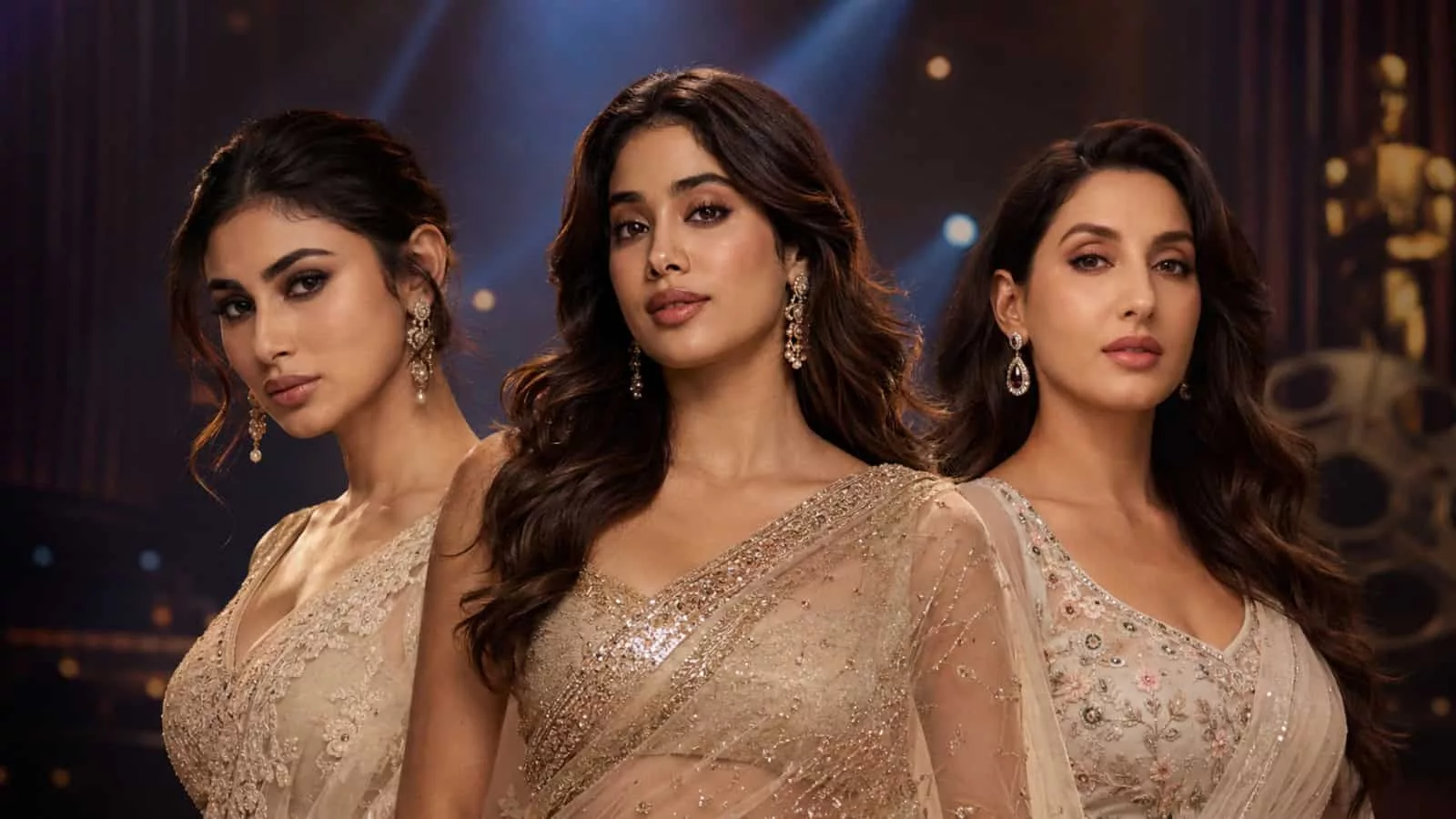
Hyderabad: Indian cinema’s old “item song” formula is no longer getting the easy pass it once did. What was earlier sold as mass entertainment, glamour or harmless fun is now being questioned sharply by younger audiences, especially when the camera, lyrics and choreography reduce women to bodies instead of characters.
1. Mouni Roy
The latest discussion started after visuals of Mouni Roy as Shammo from Hai Jawani Toh Ishq Hona Hai surfaced online. Mouni’s role had already caught attention after the trailer showed her as Varun Dhawan’s mother in the David Dhawan film, a casting choice that the internet found bizarre because the two actors are close in age. Now, her song visuals have sparked a different debate, with internet users calling out the familiar setup of one woman being surrounded by men, suggestive expressions and the same old commercial cinema gaze.
For many viewers, the problem is not dance. The problem is not glamour either. The real issue is how often Indian films package women as props in the name of entertainment. One netizen summed up the frustration by saying such songs usually show drunken men dancing around and trying to touch the “item” girl, while another questioned why filmmakers with money and reach still depend on the same outdated comedy and song templates.
2. Nora Fatehi
This conversation is not happening in isolation. Nora Fatehi’s Sarke Chunar Teri Sarke from KD: The Devil also faced major backlash for its lyrics and choreography. The National Commission for Women criticised the makers, saying creative expression cannot come at the cost of women’s dignity. The controversy also led to apologies from those involved in the hearing, while Nora’s legal representative appeared on her behalf.
3. Janhvi Kapoor
Then came Peddi. Janhvi Kapoor’s role in the Ram Charan starrer became another flashpoint after viewers accused the film of objectifying her character and giving her little agency beyond being an object of desire. The criticism was aimed not just at the actress, but at the way the character was written, shot and presented on screen.
It’s 2026, and we still refer to women as an ‘item’?
That is exactly why audiences are asking a bigger question now: why is a woman still being called an “item” in 2026? Why is her body still being used as a selling point? Why do commercial films still rely on men staring, chasing, grabbing or making faces around one glamorous woman and then call it entertainment?
For years, these songs were defended as “mass appeal.” But the internet is clearly not watching them the same way anymore. Viewers are no longer separating the hook step from the message. They are questioning the lyrics, the camera angles, the male gaze and the larger impact such portrayals have on society.
Because cinema does not exist in a vacuum. When films repeatedly show women as objects to be stared at, touched, teased or chased, they also normalise a certain behaviour outside theatres. The day our films stop portraying women as objects and start treating them like human beings, maybe society will learn to do the
Get the latest updates in Hyderabad City News, Technology, Entertainment, Sports, Politics and Top Stories on WhatsApp & Telegram by subscribing to our channels. You can also download our app for Android and iOS.
