
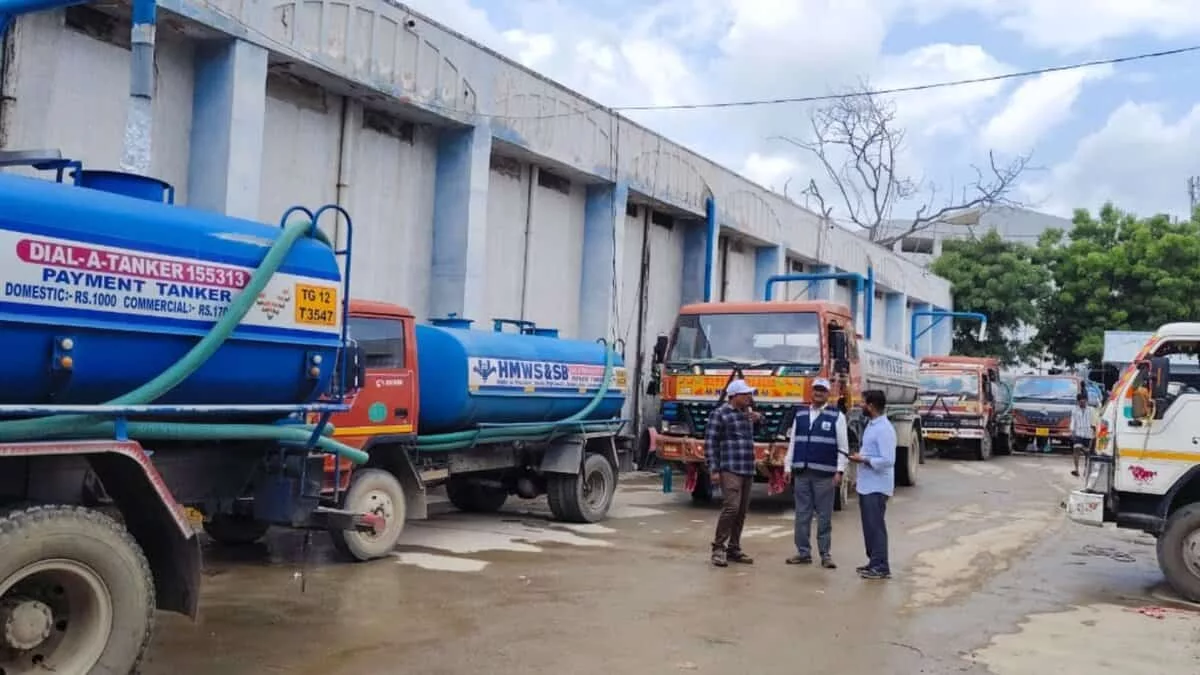
Hyderabad: The city hit an all-time high of 15,200 water tanker bookings in a single day on May 30, surpassing the previous record of 12,000, as the city’s water crisis deepened through an unusually prolonged summer season.
The HMWSSB has been supplying around 12,000 tankers a day, creating a gap between demand and actual availability. Despite the board expanding its tanker fleet to 1,250 and increasing the number of filling stations, demand has continued to outstrip supply.
Demand outpaces supply
The surge has been driven by an intense summer, delayed pre-monsoon showers, and rapid concretisation, particularly in the IT and western corridors. In May alone, Hyderabad logged 3.36 lakh tanker bookings, while groundwater levels dropped to critical depths. Areas such as Kondapur, Madhapur, Gachibowli, Kukatpally, and Serilingampally have emerged as the worst-affected zones. In several pockets, groundwater has receded to depths of up to 100 metres, rendering shallow borewells dry.
Also ReadHyderabad is India’s most water-stressed metro and residents are suffering
HMWSSB estimates that nearly 20 per cent of the city’s tanker demand now comes from the western zone. The strain on the Old City, by contrast, has been comparatively lower, with localities including Bahadurpura, Golconda, and Asif Nagar maintaining relatively better groundwater availability due to proximity to water bodies such as the Musi River and Mir Alam Tank, lower urban concretisation, and shallower groundwater levels.
A crisis years in the making
The figures reflect a sharp deterioration over recent years. Tanker bookings in March and April stood at 50,000 to 75,000 per month in 2022 but climbed to over two lakh a month during the same period in 2025.
In April 2024, deliveries had already peaked at 2,37,576 trips, a 46 per cent jump from 2023, with May 2024 recording 2,27,390 trips, up 48 per cent from the previous year. Officials have attributed the long-term trend to rising population, groundwater overexploitation, inadequate rainwater harvesting infrastructure, and poor urban planning.
Officials have attributed the long-term trend to rising population, groundwater overexploitation, inadequate rainwater harvesting infrastructure, and poor urban planning.
Get the latest updates in Hyderabad City News, Technology, Entertainment, Sports, Politics and Top Stories on WhatsApp & Telegram by subscribing to our channels. You can also download our app for Android and iOS.
