
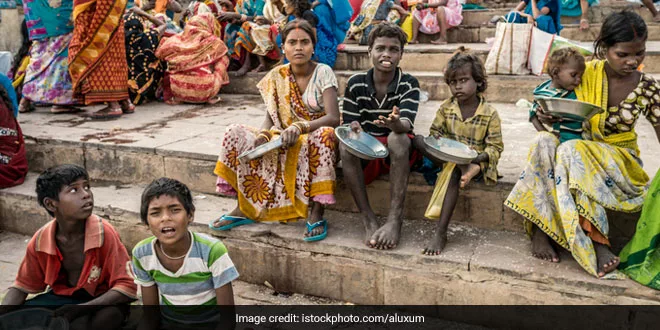
Poverty has long been a subject of debate. Growth generally reduces poverty, but its composition matters, too. Poverty is commonly measured through headcount ratios, which reflect the percentage of the population below a defined poverty line based on the minimum basket of goods and services required for subsistence. In India, this method, established in the 1950s and refined in the 1970s, uses monthly per capita consumption expenditure to determine the poverty line, as income data from household surveys are unreliable.
Measuring poverty requires both a poverty line and accurate data, with the Household Consumption Expenditure Survey forming the basis for poverty estimation. This detailed survey covers expenditure on around 350 items, including food, clothing, education, and health. However, until recently, the latest available results are from 2011-12. While attempts to create multidimensional poverty measures exist, data limitations and subjectivity have hindered their robustness, making the headcount ratio, supplemented by metrics like the Human Development Index (HDI), a reliable measure. Growth reduces poverty by lifting households above the poverty line, but reductions become more complex over time as poverty ratios tend to be sticky. This trend is empirically validated by cross-country data and India’s historical experience, with poverty reduction correlated with economic growth.
Changing Food Consumption Patterns
Fortunately, we have the results of the first phase of HCES 2022-24, i.e., for the year 2022-23. The second phase of HCES 2022-24 fieldwork had also commenced on 25 August 2023, and by now, it would also have been concluded. Since the consumption data for the second phase will also be available soon, it will be possible to arrive at (a) the poverty ratios based on the existing poverty line and (b) formulate a new poverty line based on the new consumption patterns of India.
Regardless, it is essential to understand peculiar trends in the first phase of HCES 2022-23. The recent working paper by Kapoor et al., published by the Economic Advisory Council to the Prime Minister, presents significant findings on India’s changing food consumption patterns, with wide-reaching implications for agriculture, nutrition, health, and public welfare policies. The analysis of HCES 2022-23 highlights the shift from cereal-based diets to more diverse food consumption, including an increase in milk, meat, fruits, and processed foods. This transformation directly affects food security and health outcomes across socio-economic classes.
Per Capita Expenditure Has Increased
There are four key findings. First, there is a significant rise in per capita consumption expenditure. Rural households experienced a 164% increase, while urban households saw a 146% rise. States such as West Bengal and Tamil Nadu exhibited substantial growth in consumption expenditures, with rural Sikkim leading at 394%.
The second and most important trend is the declining share of food expenditure. For the first time since independence, average household spending on food has dropped below 50% of total expenditure. This trend suggests improved living standards and economic progress, as theorised by Engel’s Law, which postulates that as incomes rise, the proportion of income spent on food declines.
Third, cereal consumption is declining. The fall was particularly stark among the bottom 20% of households, likely due to the effectiveness of government food security policies such as the Pradhan Mantri Garib Kalyan Anna Yojana (PMGKAY), which provides free food grains to millions.
This shift in consumption toward diverse foods – fruits, vegetables, dairy, and animal proteins – calls for a re-examination of India’s agricultural, health, and nutrition policies.
The Need For Diversifying Agriculture
One of the report’s clearest policy implications is the need to reorient agricultural policies towards diet diversification. The continued focus on cereals through the Minimum Support Price (MSP) and procurement systems disproportionately benefits cereal producers while demand for cereals is declining. This mirrors the findings of Pingali and Sunder (2017), who argue that cereal-centric policies in India are outdated and ignore the growing need for diversification in agricultural production.
Diversification towards horticulture, dairy, and livestock production offers a promising pathway for improving agricultural productivity and nutrition outcomes. This is also in accordance with the government’s efforts to prioritise investments in infrastructure, cold chains, storage facilities, and market access for perishable items like fruits, vegetables, milk, and meat to meet changing consumer demand.
The report highlights the significant rise in consumption of packaged and processed foods, particularly among the wealthier 20% of households. NFHS V also flagged this issue as raising concerns about public health. There is no dearth of literature showing a strong correlation between the rise of ultra-processed foods and the global epidemic of non-communicable diseases (NCDs) such as obesity, diabetes, and cardiovascular diseases.
The government should now focus on regulating the nutritional content of processed foods to mitigate their health impacts. Mandatory labelling and public health campaigns on the dangers of excessive processed food consumption should be considered, especially since these trends are more pronounced in urban areas.
Women And Children At Risk Of Anaemia
Further, the report’s analysis of anaemia and iron intake reveals a troubling finding. Despite various government initiatives to fortify food with iron, anaemia rates remain high, particularly among women and children. Again, this was also flagged by NFHS V. The study, however, confirms that dietary diversity, not just iron intake, is crucial in addressing anaemia, which aligns with findings from Ruel and Alderman (2013). Their research highlights the importance of dietary diversity in improving overall nutrition and health outcomes, particularly in reducing micronutrient deficiencies.
The limited impact of universal fortification programmes suggests that future policies should shift towards improving access to diverse, nutrient-rich foods. Promoting dietary diversity – by ensuring that poorer households can access iron-rich foods such as green leafy vegetables, eggs, meat, and pulses – could have a more meaningful impact on anaemia prevalence than cereal fortification alone. The findings also suggest a need for context-specific interventions that account for regional dietary patterns and nutritional deficits.
The report highlights the relationship between economic growth, dietary diversity, and health outcomes, drawing from the extensive body of research on how income growth can lead to better nutrition. As household incomes rise, the data suggests that diets become more diverse, shifting away from cereals to foods with higher nutritional value, such as dairy, eggs, meat, and fresh fruits.
According to Timmer (2005), economic development typically drives this transition, and improving infrastructure, transportation, and storage will play a crucial role in ensuring that diverse food items are accessible year-round, even in remote areas.
Measuring Inflation
Another critical policy implication of this report is its impact on measuring inflation. With significant changes in food consumption patterns, the composition of the Consumer Price Index (CPI) needs to be updated to reflect shifts in household spending accurately. The decline in cereal consumption and the rise in spending on fruits, dairy, and animal-based products indicate a need to revise the weightage assigned to these categories in the CPI.
The shift toward dietary diversity, rising incomes, and declining cereal consumption signals progress and calls for nuanced policy interventions. As economic growth drives this transformation, ensuring equitable access to nutrient-rich foods, rebalancing agricultural incentives, and updating inflation measures will be vital to addressing emerging health, food security, and public welfare challenges.
(Bibek Debroy is Chairman, Economic Advisory Council to the Prime Minister, and Aditya Sinha is OSD, Research, Economic Advisory Council to the Prime Minister)
Disclaimer: These are the personal opinions of the author
