
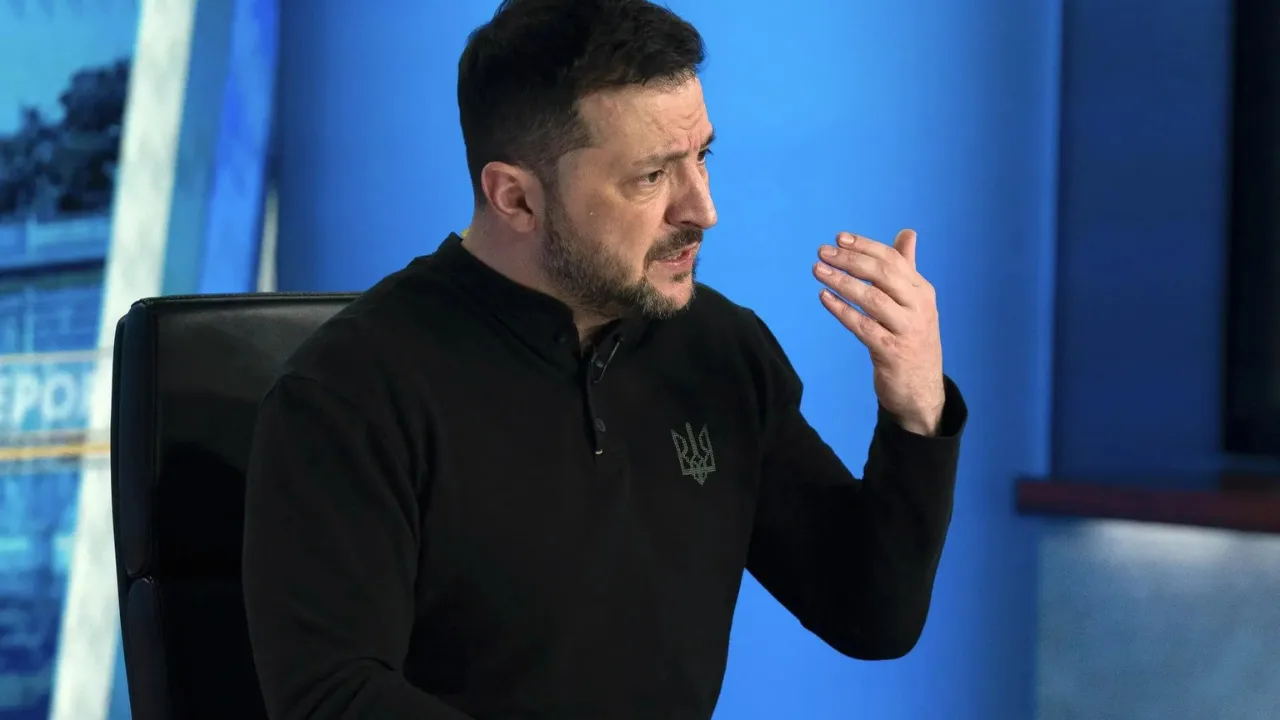
Can Ukraine really hold a free and fair election while Russian missiles are still falling, millions of its citizens are displaced and nearly one-fifth of the country remains under Russian occupation? That is the difficult question facing Kyiv as pressure grows on President Volodymyr Zelenskyy to hold elections.
Ukraine has not held a national election since 2019. Martial law, imposed after Russia's full-scale attack in February 2022, currently prevents elections from being held. But with US President Donald Trump previously calling for a vote and Zelenskyy saying he is prepared to hold one if security can be guaranteed, the issue is moving back into focus.
Holding an election in wartime, however, is far more complicated than simply setting a polling date. Ukraine would have to deal with Russian attacks, millions of displaced voters, soldiers serving on the front lines, citizens living in occupied territories and the risk of Russian interference.
So, what would it actually take for Ukraine to hold elections amid the war - and could Zelenskyy emerge as the winner if it happens?
President Volodymyr Zelenskyy has said he is ready to hold elections if the United States and Kyiv's European allies can guarantee the security of the vote. US President Donald Trump has also previously called for elections in Ukraine.
Ukraine has not held an election since 2019. The country has been under martial law since Russia launched its full-scale invasion in February 2022. Under Ukrainian law, elections cannot be held while martial law is in force because of security concerns.
The war is still being fought along more than 1,200 km of Ukraine's eastern, southern and northern fronts. Russian drones and missiles regularly strike cities and towns far from the battlefield. Attacks on power plants and other energy infrastructure have also disrupted electricity supplies.
Opinion polls have consistently shown that most Ukrainians oppose holding elections while the war continues.
Political analyst Volodymyr Fesenko told Reuters that an air ceasefire would be an important first step before Ukraine could seriously consider holding a vote. He said Kyiv would also need to create a new legal framework covering the timing, rules and procedures for the election. Fesenko estimates this could take about six months.
Ukraine would also need to protect the election from possible Russian interference and manipulation, analysts said.
Russia has said Zelenskyy is illegitimate because his term ended in May 2024 and that he therefore cannot sign peace deals on Ukraine's behalf. Trump also criticised the lack of elections in an interview with Politico in December, saying it was time for a vote.
Millions of Ukrainians could struggle to reach polling stations or register to vote.
More than 4.4 million Ukrainians had temporary protection status in the European Union as of the end of June. Ukraine would therefore have to organise hundreds of polling stations across Europe.
Nearly 4 million Ukrainians are also internally displaced within the country, according to the UN migration agency. Analysts say registering these voters and updating the State Register of Voters would be a major challenge and could divert time and resources away from the war effort.
Around 1 million people are serving in Ukraine's defence forces. Organising a free and fair election for troops serving on a drone-hit front line would be extremely difficult and could require changes to election laws.
There is another major problem: the millions of Ukrainians living in areas occupied by Russia.
Ukrainian officials estimated that around 4.5 million adults were living in Russian-occupied territories as of 2024. Russia controls about 19% of Ukraine and plans to hold its own elections in those areas next month. Ukraine has said those elections would be illegal.
If elections are held, Zelenskyy would still have a strong chance of winning, according to opinion polls.
His popularity rose to around 90% in the early stages of the war but has since fallen to about 60%, depending on the poll.
Analysts and pollsters say his approval ratings were hit by a major corruption scandal in the energy sector last year. However, his support has since recovered and he remains the leading candidate among Ukraine's traditional politicians.
Former armed forces chief and current ambassador to Britain Valeriy Zaluzhnyi is seen as one of his strongest potential challengers. Another is Kyrylo Budanov, Zelenskyy's chief of staff and former military intelligence chief.
Mykhailo Fedorov, a 35-year-old technology-focused reformer, has also gained support in recent polls. His popularity increased after Zelenskyy abruptly dismissed him as defence minister last month, after only six months in the job. His removal triggered a rare wave of wartime street protests.
Ukraine's NV media cited pollster SOCIS as showing Fedorov with around 13% support, compared with 21% for Zaluzhnyi and 22% for Zelenskyy. Other polling has suggested that if either Fedorov or Zaluzhnyi reached a second-round runoff against Zelenskyy, they could defeat him.
For Ukraine, however, the bigger question may be whether it can create the security, legal and logistical conditions needed to hold a credible election while the war is still being fought.
Pushing Ukraine to vote while missiles fall is a trap dressed as democracy. With a fifth of the country occupied, four million displaced abroad and a million in uniform, no election could be truly free—and Moscow knows it. Zelenskyy is right to demand security first. A rushed ballot wouldn't legitimise Kyiv; it would legitimise Russia's war.
Anurag Kumar is an Assistant Editor at Times Now, where he leads the News Desk and Business Desk, driving coverage across politics, economy and market... View More


Comments (0)
No comments yet. Be the first to share your thoughts!
Leave a Comment
Your comment will appear after moderation. Your email will not be published.