
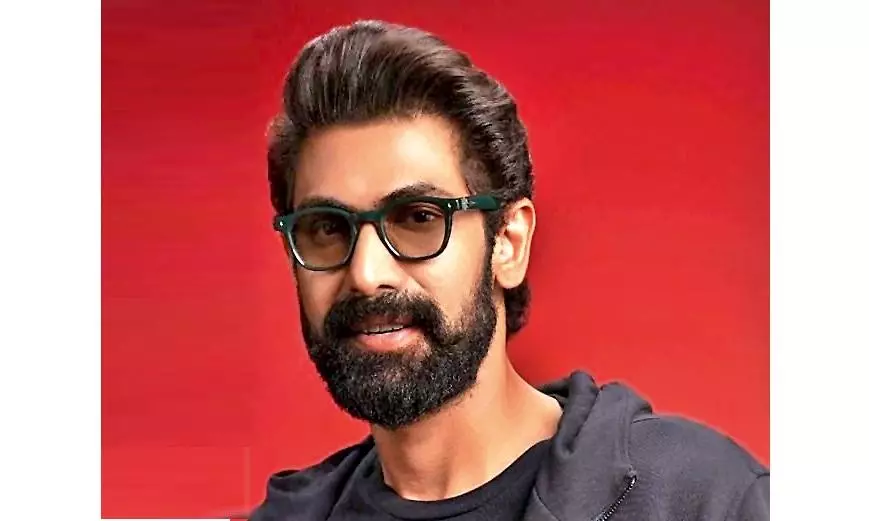
At a time when the film industry is increasingly obsessed with predicting what will work at the box office, Rana Daggubati says he has stopped trying to second-guess the business. For him, the more interesting challenge now is finding stories that haven’t been told before and filmmakers who have something different to say.
“Business has a logic you can work out on paper. Art doesn’t. You can do everything right and it doesn’t land, and you can do something nobody understood at the time and it stays with people for thirty years. There’s no formula, and anyone who tells you they have one is selling something. So I’ve stopped trying to predict it. I back the ones I find interesting, with people I want to work with. Some will work, some won’t. The ones that failed have taught me more than the hits did.”
That philosophy is evident in his decision to come on board as producer of Last Man in the Tower, the Manoj Bajpayee-Divya Dutta starrer adapted from Aravind Adiga’s 2011 bestseller. Rana says he chose to read the book before reading the screenplay.
“It’s a story of Bombay, but it’s really the story of every big city — a place with a past, and people trying to hold on to it while everything around them is being sold and rebuilt. Anybody who lives in an apartment will recognize something in it. That’s what drew me.
“Business has logic you can work out on paper. Art doesn’t. You can do everything right and it doesn’t land, and you can do something nobody understood at the time and it stays with people for LONG.”
And then Ben had a screenplay and had Manoj ji and Boman in mind and then there was no stopping, and there was nothing more to think about.” Rana’s production choices reflect his taste for unconventional stories. His company, Spirit Media, which began as a VFX and production outfit, has built its own distribution network. He also helped drive the theatrical release of Payal Kapadia’s Cannes Grand Prix winner, All We Imagine as Light.
The company has backed films such as Sabar Bonda and Nepali film Shape of Momo, with Rana increasingly drawn to unconventional stories and characters. “It has to be engaging — I’m not interested in difficult for the sake of difficult. But it also has to be about something. Whatever the genre is, it has to be deep. If a film is only doing one of those two things, it usually doesn’t hold.”
And as big-ticket films struggle at the box office and the industry debates its creative direction, Rana believes the biggest problem may not be the making of films at all. “The making has never been the problem. There are more good films being made in this country right now than at any point I can remember. The problem is everything after — where does the film go, who gets to see it, how does it find its audience? A lot of this work is stuck inside a language or a region and never gets an opening. So the need of the hour is exhibition and distribution, not more production. Places where this cinema can play, and enough consistency that an audience builds a habit around it. Once the habit is there, the economics stop being a worry. That’s the part we’re trying to build.”
Rana believes the biggest problem may not be the making of films at all. “There are more good films being made in this country right now than at any point I can remember. The problem is everything after — where does the film go, who gets to see it, how does it find its audience?”



Comments (0)
No comments yet. Be the first to share your thoughts!
Leave a Comment
Your comment will appear after moderation. Your email will not be published.