
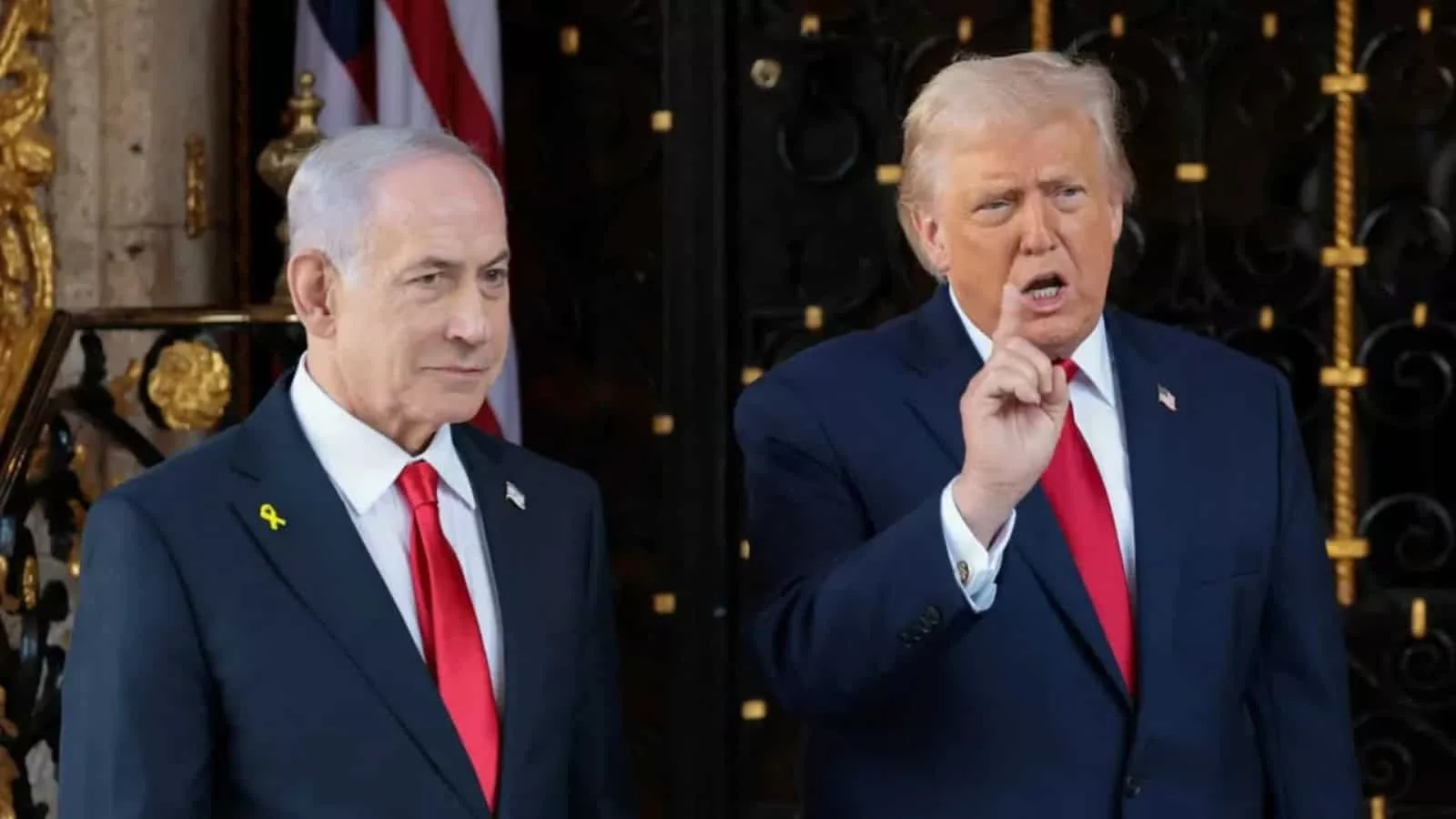
On Sunday night, June 7, Donald Trump told three news organisations the same thing: he was in control.
He told Fox News a peace deal with Iran was days away. He told Axios that Israel would not retaliate for Iran’s missile strikes. He told the Financial Times that Benjamin Netanyahu “won’t have any choice” but to accept whatever Washington decides, because Trump, not Netanyahu, “calls the shots.”
By Monday morning, June 8, the Israeli Air Force had struck Isfahan, Karaj, Tabriz and Tehran.
Not the first time
It was the third time in six weeks that a Trump declaration about Israeli military action had been overtaken, that too within hours, by Israeli military action.
On April 18, after a ceasefire between Israel and Lebanon went into effect, Trump posted on Truth Social, “Israel will not be bombing Lebanon any longer. They are PROHIBITED from doing so by the U.S.A. Enough is enough!!!”
He told Axios, “Israel has to stop. They can’t continue to blow buildings up. I am not gonna allow it.”
Netanyahu and his advisers were shocked by the post, which contradicted the text of the ceasefire agreement the State Department had just published. Israeli strikes on Lebanon’s south continued the next day, and every day after.
On June 1, after threatening to strike Beirut’s southern suburbs, Trump posted on Truth Social, “I had a very productive call with Prime Minister Bibi Netanyahu, of Israel, and there will be no Troops going to Beirut, and any Troops that are on their way have already been turned back.” He separately claimed, through unnamed intermediaries, that Hezbollah had also agreed to halt all shooting.
Even as Trump’s post went up, Netanyahu said the Israeli military would keep striking southern Lebanon “as planned.” Defence Minister Israel Katz denied there was a ceasefire.
What followed was a week of strikes
The next morning, June 2, Israeli drone strikes killed eight people in southern Lebanon, and among them was a dentist from the Christian town of Qlayaa, James Karam, who died on the road between Marjayoun and Nabatiyeh along with his daughter and son. Two more were killed in the village of Toul. Two Syrians working at a plant nursery in Jibchit were killed in a separate strike. A third hit a car near Harouf, killing one person.
The Lebanese army said two of its soldiers were lightly wounded when a drone targeted them on a road outside the city.
On June 3, an Israeli strike hit a car on a busy highway in Khaldeh, just south of Beirut, hours before the second day of Israel-Lebanon talks in Washington was due to begin. Israel warned Christian neighbourhoods in the coastal city of Tyre overnight that Hezbollah members were sheltering among them.
The Lebanese army deployed to the district to show no armed presence existed there. Two strikes near Tyre that night killed four Syrians and two Palestinians.
Strikes continued through June 5, when Israel’s air force hit multiple parts of southern Lebanon and issued evacuation warnings for nine villages, including Anqoun, which had been largely spared and was sheltering around 2,500 displaced people. Six were killed. Families fled Anqoun and the area of Aarnaya near the coastal city of Sidon.
Nearly three hours after the warnings were issued, Israeli warplanes struck the villages anyway.
On June 6, airstrikes killed nine people in southern Lebanon, including a brigadier general, a captain and a soldier from the Lebanese army, hit in a vehicle on the road linking Nabatiyeh and Marjayoun. Six more were killed in the village of Saksakiyah. Lebanon’s President Joseph Aoun called it “a flagrant violation of Lebanese sovereignty and international law.”
The Lebanese army said Israel’s attacks were aimed at sabotaging every effort to reach a ceasefire. Israel said the vehicle was “moving suspiciously” and that it operates against Hezbollah, not the Lebanese army.
On June 7, Israel struck Beirut’s southern suburbs without warning, despite a direct US request not to. A residential building was hit; four of its seven floors were damaged, and an unexploded weapon was found in the rubble. Two people were killed and 11 wounded. A senior US official said Washington was “not surprised” by the strike.
By that point, more than 3,500 people had been killed in Lebanon since the war began on March 2, and more than a million displaced.
‘Pseudo agreed’
According to a US official cited by Axios, Trump called Netanyahu on Sunday after Iran launched its missile barrage, urging him to hold off because “we are close to doing something good in terms of a deal.”
Netanyahu pushed back. He ultimately “pseudo agreed” to stand down, the official said, noting the call was calmer than a tense exchange between the two leaders the previous week, and that Trump did not raise his voice this time.
Hours later, Israel struck four Iranian cities with air-launched ballistic missiles. Sirens sounded in Saudi Arabia near a US air base. Iran closed its main international airport.
Iran strikes Israel, both north and south, in response to Israeli ballistic missile attack on Tehran & other Iranian cities Iranian rocket fell in the "Itamar" settlement established on Nablus lands.pic.twitter.com/Xzp35OAAUZ— Nizam Tellawi (@nizamtellawi) June 8, 2026
The deal that wasn’t
Trump had told Fox News on Sunday he expected an agreement with Iran to be signed “Monday, Tuesday or Wednesday of this coming week.” He appealed to both sides to step back.
“Each of them had their fun,” he said. “Israel had its strike, and Iran had its strike. We don’t need another one.”
Israel disagreed.
Get the latest updates in Hyderabad City News, Technology, Entertainment, Sports, Politics and Top Stories on WhatsApp & Telegram by subscribing to our channels. You can also download our app for Android and iOS.
