


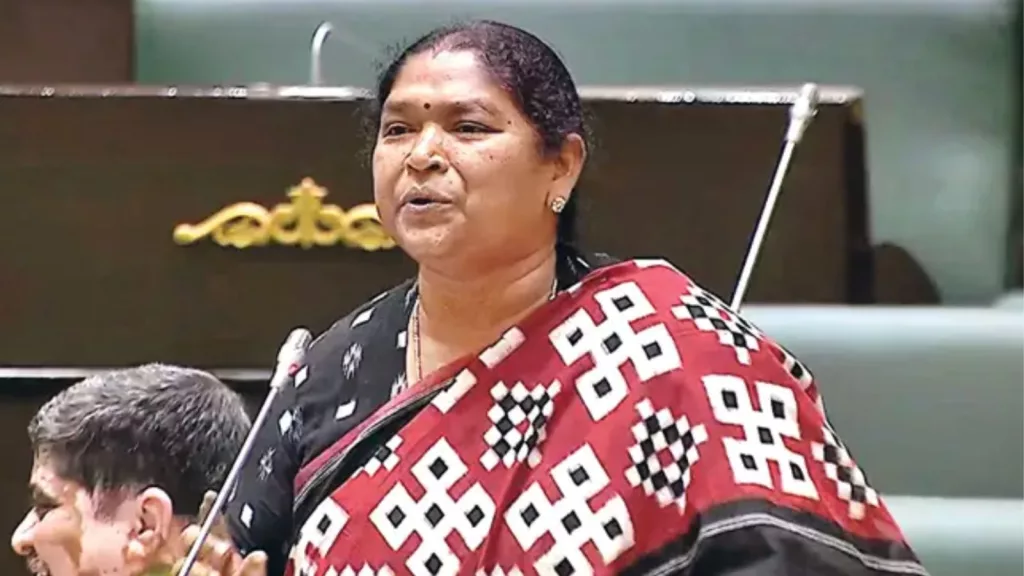
Hyderabad: The Telangana government has decided to formally convey its objections to the Centre over the proposed implementation of the Viksit Bharat–Guarantee for Rozgar and Ajeevika Mission (Gramin) [VB-G RAM G], which is set to replace the Mahatma Gandhi National Rural Employment Guarantee Scheme (MGNREGS) from July 1.
The decision was taken at a high-level meeting chaired by Panchayat Raj and Rural Development Minister Seethakka at Praja Bhavan on Saturday. The meeting resolved to send an official letter to the Union government outlining the state’s concerns and objections regarding the new scheme.
Assembly resolution
The state government had earlier passed a resolution in the Assembly opposing the implementation of VB-G RAM G and forwarded it to the Centre.
Despite Telangana’s objections, the Union government has asked the state to implement the scheme and has already allocated funds for its rollout. Several states across the country have also begun issuing notifications for the implementation of the new programme.
Officials informed the meeting that the state may have little choice but to adopt the new framework if it wishes to continue receiving at least 60 per cent of the funds required for employment guarantee works from the Centre.
Also ReadVB-G RAM G Act to come into force from July 1 replacing MGNREGA: Centre
Strong objection to 60-day break
Speaking after the meeting, Seethakka expressed serious concerns over a provision in the new law that mandates a 60-day suspension of employment works during the agricultural season.
She said the provision was not suitable for Telangana, where the agricultural season coincides with the monsoon period. During this time, the state undertakes large-scale plantation drives, including Vanamahotsavam and other afforestation activities through MGNREGS.
“A 60-day halt in employment works would disrupt plantation activities and run counter to the Centre’s Green India objectives. The provision would also adversely affect tribal communities and people living in hilly and remote areas who depend on such works for their livelihoods,” the minister said.
The state government also maintained that the Centre should bear the cost of all ongoing employment projects, buildings and other infrastructure works until their completion.
Telangana plans to request the Union government to postpone the implementation of the new law by two months, allowing states sufficient time and flexibility to adapt to the revised framework.
Decision before Cabinet
Seethakka said that, besides sending a formal letter, the government would place the matter before the state cabinet under the leadership of chief minister A Revanth Reddy if implementation of the scheme became unavoidable. A final decision on the state’s course of action would be taken after detailed deliberations in the Cabinet, she added.
Get the latest updates in Hyderabad City News, Technology, Entertainment, Sports, Politics and Top Stories on WhatsApp & Telegram by subscribing to our channels. You can also download our app for Android and iOS.