
Ukraine’s military says it has lost some access to a key satellite communications tool, and the problem has put a spotlight on a service few people know much about. Called Starshield, it is the military-focused sibling of SpaceX’s better-known Starlink. Here is a plain look at what it is, how it works and why it matters.
This week, Ukrainian forces said their battlefield operations had been hurt after they lost some access to satellite-based communications. They pointed to restrictions on Starshield in particular.
Serhiy Beskrestnov, an adviser to President Volodymyr Zelensky on weapons technologies, said the army got no warning about the limits. He wrote on social media that this caused a number of missions to fail. According to him, the restrictions hit devices moving faster than 100 miles per hour and were tied to “the current political situation.”
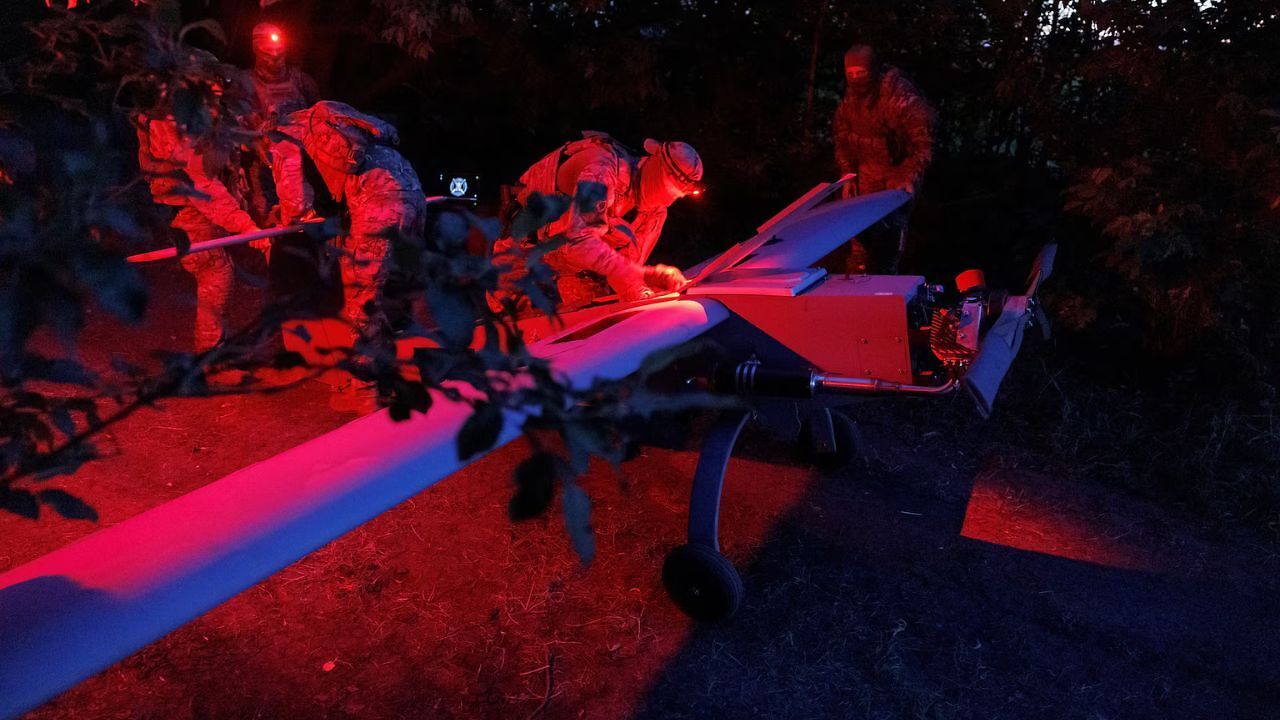
Those devices are called terminals. They send satellite internet to users and can be mounted on vehicles or drones to help steer them to their location.
Ukraine’s defense ministry put the blame on SpaceX, saying the company had restricted Starshield terminals on its own. Officials said this makes drone missions harder and weakens frontline logistics, reconnaissance and signal relaying. SpaceX, Elon Musk and Gwynne Shotwell did not respond to requests for comment, the New York Times reported.
It offers stronger security than Starlink, which lets it handle classified information. SpaceX says it is designed to support U.S. national defense uses for the Department of Defense and other government partners.
The U.S. government has put billions of dollars into the technology. That spending is part of the nearly $4.2 billion in revenue SpaceX reported last year from providing connectivity to governments and businesses. The Pentagon, in turn, lets Ukraine use Starshield.
Musk has described Starlink as a civilian service and Starshield as a military one. In 2023, he wrote on X that Starshield would be owned by the U.S. government and controlled by the Space Force, the Defense Department’s space branch.
Some observers question how separate the two really are, since outages have knocked out both at the same time. Governments, Ukraine included, have also used Starlink for war efforts for a long time, despite the civilian label.
On Wednesday, Musk wrote on X that "Starshield systems are owned and controlled by the US government. Any limits on speed or usage are decided by the US military and ultimately POTUS."
"Starlink is a commercial service owned and controlled by SpaceX. Usage of Starlink is limited to civilian or defensive activities and cannot be used for offensive military action, as doing so would be inappropriate for a commercial company," he added.
In March, Musk repeated that using commercial Starlink terminals for weapon systems breaks its terms of service. He said that rule applies to all users and that violators are shut down when found. He added that Starshield is run by the U.S. government and is not under SpaceX control.
SpaceX also went public this summer in a major share sale that made Musk the world’s first trillionaire.
Sagar is a journalist with an interest primarily in geopolitics and American domestic politics. Before joining Times Now, he wrote for Republic and Sw... View More



Comments (0)
No comments yet. Be the first to share your thoughts!
Leave a Comment
Your comment will appear after moderation. Your email will not be published.