
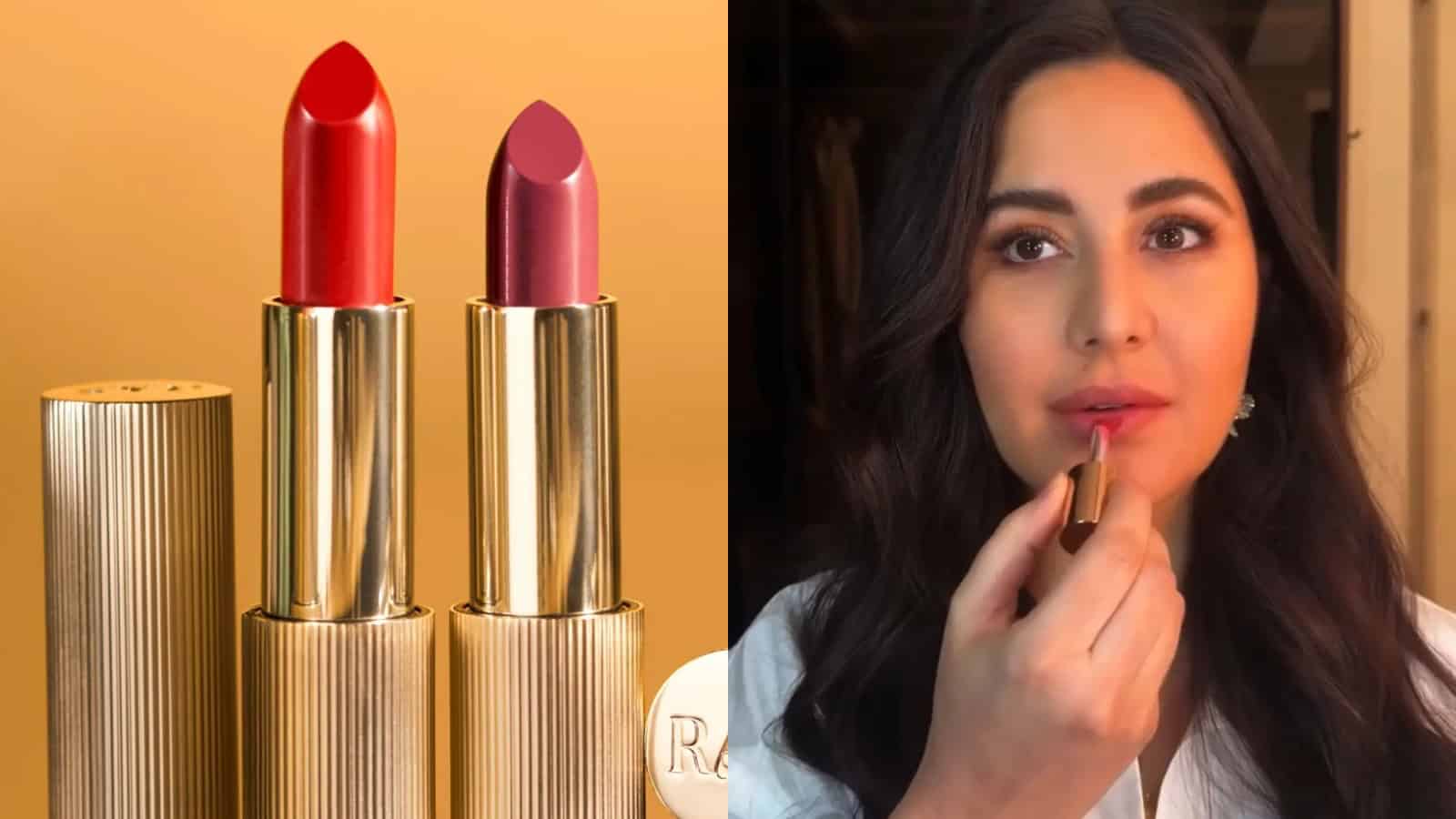
Imagine rushing out for Irani chai with friends in Hyderabad. Your outfit is ready, but something feels incomplete. You reach for your favourite lipstick, apply a quick swipe and feel ready to go.
But its story stretches back thousands of years, through ancient civilisations, royal courts, Hollywood and modern beauty counters.
Around 5,000 years ago, people in ancient Mesopotamia used crushed minerals and coloured materials to decorate their lips and faces. Some early cosmetics contained toxic ingredients, including lead-based compounds.
A carved stone vial discovered in southeastern Iran contained a deep-red cosmetic that researchers believe was likely used as lip paint. A scientific study published in 2024 dated the preparation to between 1936 and 1687 BC.
It contained red mineral pigments, plant waxes and other organic materials ingredients that make it surprisingly similar to some modern lipstick formulas.
Ancient Egyptians used red ochre and other pigments to colour their lips and faces. Cleopatra VII, who ruled Egypt from 51 to 30 BC, remains a famous beauty icon. Popular accounts say she used crushed carmine-producing insects to create red lip colour; some stories also mention ants.
However, her exact recipe is unknown, and the claim about ants is not firmly documented. What is clear is that cosmetics were an important part of ancient Egyptian grooming.
Queen Elizabeth I of England became famous for her pale complexion and striking red lips. During the 16th century, her appearance helped popularise a distinctive royal beauty style.
Lip preparations could contain beeswax and coloured pigments. Yet makeup also faced criticism, with some people viewing it as improper. Lip colour could be admired at court and judged elsewhere.
In 1884, French perfume house Guerlain is credited with introducing lipstick commercially. Unlike today’s twist-up sticks, early products were wrapped in silk paper or sold in simple containers. This was an important step towards making lip colour a packaged beauty product.
In 1915, a practical metal lipstick container helped make lip colour easier to carry and apply. In 1923, James Bruce Mason Jr received a US patent for a screw-operated, swivel-up cosmetic container. These packaging advances helped turn lipstick into a handbag essential.
During the 1920s, flapper fashion and silent-film actresses popularised dramatic, carefully shaped lips. Hollywood continued to make red lipstick a symbol of glamour in the 1930s and 1940s.
During the Second World War (1939–1945), cosmetics advertising in some countries presented lipstick as a small way to maintain morale during difficult times.
American chemist Hazel Bishop introduced her No-Smear Lipstick in 1950. Designed to resist smudging, it helped popularise longer-lasting lip colour and influenced later formulas.
Lipstick trends changed with fashion: pale pinks became popular in the 1960s, bold colours made a statement in the 1980s, and brown and neutral shades became recognisable in the 1990s.
Today, choices range from classic reds and nude shades to liquid mattes, glossy tints, lip oils and tinted balms.
In Hyderabad, lipstick can complete a festive look or add a finishing touch before meeting friends for Irani chai. Modern formulas use waxes, oils, emollients and pigments. Vegan and cruelty-free are different claims, and some lipsticks still use insect-derived colourants such as carmine, so checking the label can help.
From mineral pigments to modern tubes, lipstick has survived changing fashions and social rules. Today, it may be a finishing touch before work or a celebration, but its history reflects changing ideas about beauty and identity.
After thousands of years, its appeal remains simple: the freedom to choose a colour that feels like you.
Stay updated with our WhatsApp & Telegram by subscribing to our channels. For all the latest Entertainment updates, download our app Android and iOS.


Comments (0)
No comments yet. Be the first to share your thoughts!
Leave a Comment
Your comment will appear after moderation. Your email will not be published.