
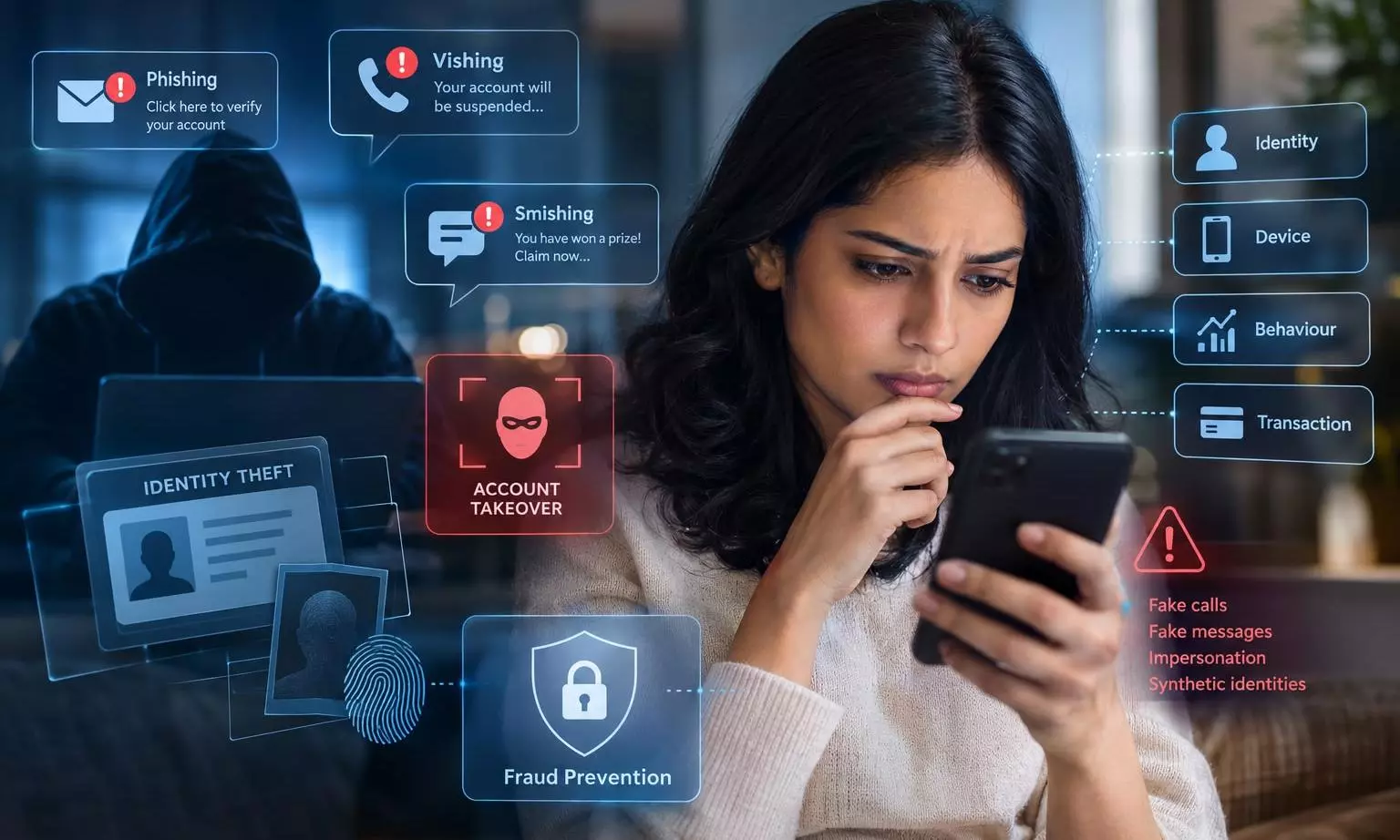
Natarajan Ramani, President and CEO of TransUnion INDAS, discusses how identity theft, account takeovers and social engineering are reshaping digital fraud in India, and why businesses need to detect risk well before a transaction takes place.
He also examines the challenge of balancing stronger fraud prevention with seamless customer experiences, responsible data use and growing consumer expectations around digital trust.
India's digital fraud rate is significantly higher than the global average. What factors are driving this trend, and how should businesses respond?
India's suspected digital fraud rate was 7.1% in 2025, compared to 3.8% globally. While this marks a significant decline from 13.1% in 2024, it remains nearly twice the global average.
The key shift is that fraud has become increasingly identity-centric. Fraudsters are using phishing, social engineering, account takeover and synthetic identities to gain access to legitimate accounts and services. TransUnion research found that 59% of Indian consumers, who responded to the survey, reported being targeted by digital fraud in 2025.
To respond effectively, businesses need to move beyond transaction monitoring and assess risk continuously across onboarding, login and transactions by combining identity, device and behavioural intelligence.
As more customer interactions move online, where do organisations still struggle to balance security with a frictionless user experience?
The challenge is applying the right level of security to the right interaction. Overly rigid controls create unnecessary friction, while weaker controls increase fraud risk.
In India, account login recorded the highest suspected digital fraud rate in 2025 at 3.9%, followed by account creation at 3.1% and financial transactions at 1.2%. This demonstrates that risk often emerges well before a payment occurs.
Organisations need a risk-based approach that uses identity, device and behavioural signals to distinguish trusted customers from higher-risk interactions. This enables stronger verification where necessary while keeping low-risk interactions seamless.
Natarajan Ramani, President and CEO, TransUnion INDAS
Fraud is increasingly happening before a transaction even begins. How should businesses rethink their approach to detecting risk earlier in the customer journey?
Fraud prevention can no longer be treated as a control applied only at the point of payment. Today's attacks often begin with compromised credentials, account takeover attempts or synthetic identities, long before a transaction takes place.
Businesses therefore need to assess risk continuously across the customer lifecycle, from account creation and login through to transactions. Globally, account creation was the highest-risk stage in 2025, with 8.3% of attempted digital interactions suspected to be fraudulent.
A more effective approach is to connect identity, device and behavioural signals to create a unified view of risk and identify suspicious activity earlier in the customer journey.
How important is it for organisations to connect identity, device, behavioural and transaction data to improve fraud detection and decision-making?
It is increasingly critical because no single data point provides a complete understanding of risk. An identity may appear legitimate, but behavioural or device signals may indicate otherwise.
When these signals are assessed in isolation, organisations often miss the broader context behind digital interactions. Connecting identity, device, behavioural and transaction data enables a more complete view of who is interacting, how they are behaving and whether an action aligns with expected patterns.
This allows organisations to identify high-risk activity more accurately while reducing unnecessary friction for legitimate customers.
How can businesses deliver more personalised customer experiences while meeting rising expectations around privacy and responsible data use?
Customers increasingly expect experiences that are both relevant and trustworthy. Personalisation is most effective when consumers understand that their information is being used responsibly and securely.
In India, 67% of consumers consider confidence in the security of their personal data to be very important when choosing whom to transact with online.
At TransUnion INDAS, we believe trust and relevance must go hand in hand. Businesses can meet these expectations by combining strong data governance and security practices with a deeper understanding of customer needs. The goal is to use data responsibly to improve relevance, convenience and trust simultaneously.
With digital scams making consumers more cautious, what can businesses do to ensure legitimate calls and messages are trusted and easily recognised?
As impersonation scams, phishing, smishing and vishing become more common, consumers are increasingly cautious about engaging with digital communications.
Businesses need to make legitimate outreach easier to recognise through trusted caller identification, verified business identities and technologies that help detect spoofing and other suspicious activity.
Ultimately, trust should not depend solely on consumers being able to spot a scam. Organisations also need to make authentic communications clearly identifiable, helping customers engage with confidence while reducing opportunities for fraudsters to exploit trusted brands.



Comments (0)
No comments yet. Be the first to share your thoughts!
Leave a Comment
Your comment will appear after moderation. Your email will not be published.