
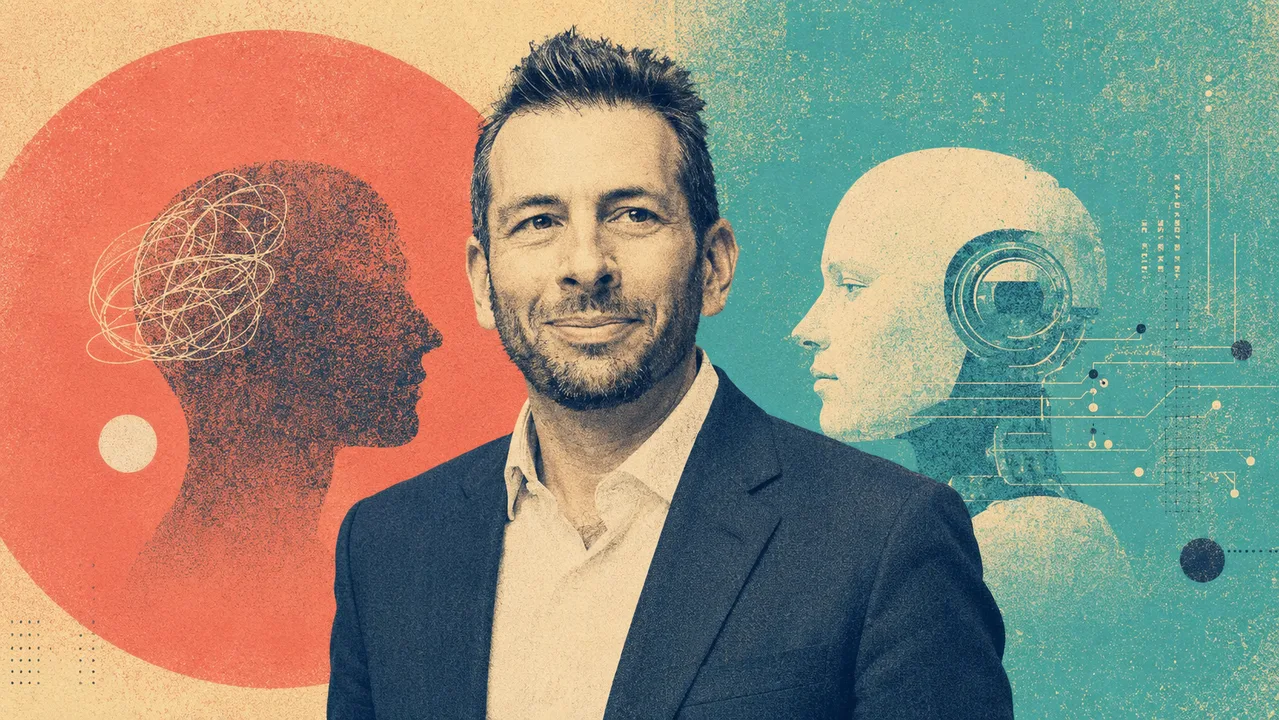
Is artificial intelligence gaining consciousness? This is the question many researchers have tried to answer over the years. Now, Blaise Agüera y Arcas, Google’s vice-president of Technology and Society and leader of the company’s Paradigms of Intelligence team, suggests that the debate may be approaching the issue from the wrong direction.
In a guest essay for The Economist, Agüera y Arcas explained that advanced AI models can create the impression that there is another mind on the other side of a conversation, despite being designed primarily to assist users.
“Are LLMs merely powerful digital tools with language interfaces, or are we now having conversations with other minds, experiencers of the world in their own right?” he asked.
The question has implications beyond technology. If consciousness is connected to the ability to experience suffering, determining whether AI systems are conscious could eventually become an ethical issue. Agüera pointed to growing interest among AI companies in philosophy and AI welfare, noting that Anthropic’s Claude Opus 4.6 reportedly estimated its own chances of being conscious at 15–20 per cent.
Rather than treating consciousness as an objective property that can simply be detected, the Google executive proposes a different interpretation.
“I have come to believe, however, that we have this backwards,” he wrote. According to his argument, humans may first decide which entities deserve care and subsequently regard them as having an inner life.
“We do not care for others because they are conscious. Rather, we believe they are conscious when and because we care about them,” Agüera y Arcas wrote.
He stressed that this does not mean consciousness is an illusion. Instead, he described it as a model or belief concerning entities that appear to possess experiences, emotions, intentions and agency. The argument also raises concerns about how humans have historically decided who deserves moral consideration. Agüera y Arcas warned that if people can choose whom to regard as conscious, those judgments can also be wrong.
Discussing AI and human interaction, he wrote that “consciousness is relational” and argued that intelligent cooperation requires entities to develop models of both themselves and others. Agüera y Arcas concluded that society should not simply treat AI as human, but should reconsider whether intelligence and moral consideration must be limited to familiar forms of mind.
Govind Choudhary is the Chief Copy Editor for Tech at Times Now with over five years of experience in the media industry. He covers consumer technolog... View More



Comments (0)
No comments yet. Be the first to share your thoughts!
Leave a Comment
Your comment will appear after moderation. Your email will not be published.