
Thu, Sep 17, 2026 | Rabi al-Thani 7, 1448 | Fajr 04:48|DXB 31.7°C
A UAE-Iran meeting in New Delhi has provided an important platform for the two countries to explore a path towards the future despite continuing differences, Dr Anwar Gargash, Diplomatic Adviser to the UAE President, said at the Arab Media Summit in Dubai.
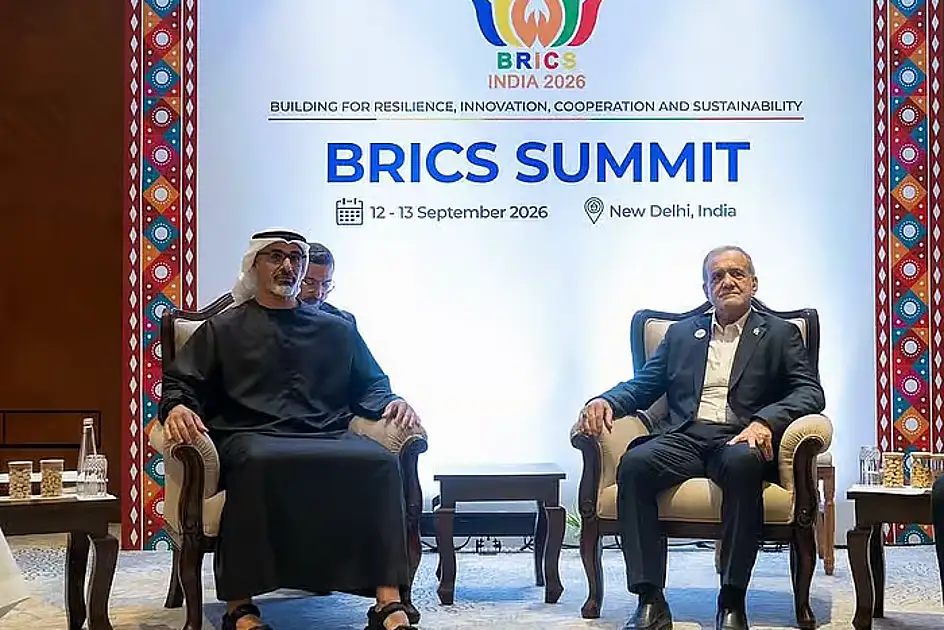
Gargash was referring to the September 12 meeting between Sheikh Khaled bin Mohamed bin Zayed Al Nahyan, Crown Prince of Abu Dhabi, and Iranian President Masoud Pezeshkian on the sidelines of the BRICS Summit in the Indian capital.
The encounter did not mean that Abu Dhabi and Tehran agreed on every issue, however, it created an important channel through which the two sides could address tensions and consider the future of their relationship.
Stay up to date with the latest news. Follow KT on WhatsApp Channels.
Gargash also described Pezeshkian as a voice of reason at a critical time. He said the Iranian leader’s positions and statements during the prolonged crisis had been “balanced and rational” and should not be overlooked at such a delicate stage.
The meeting reflected the UAE’s policy of combining deterrence with diplomacy, Gargash said. Geography made engagement with Tehran necessary, but rebuilding trust would require actions rather than words.
Addressing the region’s changing geopolitical landscape, Gargash said the immediate challenge was not only to manage the current crisis but also to establish a sustainable framework for future relations.
He said dialogue and communication were essential to restore normal economic and commercial activity, including trade, aviation and access to markets and ports. However, he stressed that reopening channels and rebuilding trust were separate tasks.
"The relationship is one thing, and trust is another,” Gargash said. Trust, he added, would have to be restored gradually after the severe pressure and attacks experienced across the region.
Gargash said Iran should reconsider the model through which it exercises regional influence. Tehran, he argued, would gain more from concentrating on economic development and cooperation than from strategic expansion, proxy groups and confrontation.
A more constructive approach could help Iran move beyond isolation and participate in what he described as a promising Arab regional system, while creating better prospects for its economy and people.
He said Gulf states sought a stable region based on respect for sovereignty, non-interference and secure trade routes. Any durable settlement would therefore require actions that create confidence, not declarations alone.
The UAE’s policy, Gargash said, rests on maintaining open diplomatic channels while retaining the ability to defend the country. He described this as a balance between diplomatic flexibility and firmness over deterrence and self-defence.
Gargash also highlighted the leadership of President Sheikh Mohamed bin Zayed Al Nahyan, saying the UAE’s approach combines political steadiness, realistic diplomacy and the capacity to safeguard the country’s interests.
Turning to Saudi Arabia, Gargash said the Kingdom’s security and stability were integral to the security of the wider Gulf.
"Saudi Arabia’s security is in our interest, and anything that affects Saudi Arabia affects us directly,” he said.
He added that security across the Gulf was interconnected and that a threat to one state could not be viewed in isolation from the interests of its neighbours.
On regional conflicts, including Yemen, Gargash rejected the use of armed groups operating outside state institutions. Weapons deployed by non-state actors, he said, threatened not only the country in which they operated but also neighbouring states.
The UAE’s preferred approach was to strengthen national institutions, support trade and development, and prevent outside powers from dominating countries through armed proxies, he added.
Ruqayya Alqaydi is an associate editor with an endless curiosity to learn. Like a journalist on a caffeine overdrive, she is fuelled by passion and on a mission to uncover every gem in the UAE.
One killed, two injured by falling shrapnel after drone interception in Saudi Arabia
Dubai's 80km fourth highway explained: Journey time cut by 60%, key road upgrades
British Airways to resume Dubai flights in November; situation under constant review
UAE raises overnight deposit rate after Fed’s quarter-point hike
UAE-Iran meeting offers path forward despite differences, says Anwar Gargash
©2026 Galadari Printing and Publishing LLC. All rights reserved.


Comments (0)
No comments yet. Be the first to share your thoughts!
Leave a Comment
Your comment will appear after moderation. Your email will not be published.