


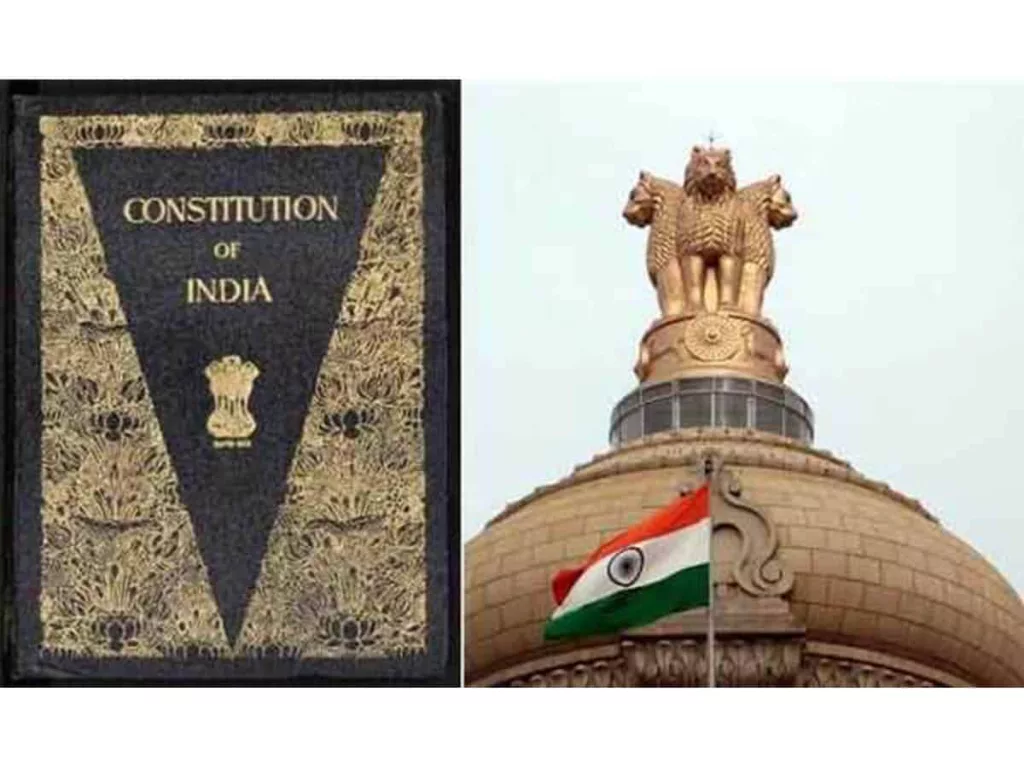
The Chief Justice of India, Surya Kant, recently remarked at Oxford that the Supreme Court is developing a “Swadeshi Jurisprudence” rather than relying solely on “imported concepts.” He made the observation while discussing the judiciary’s adoption of artificial intelligence and technology, arguing for frameworks rooted in India’s own constitutional values rather than imported models. Coincidentally, at almost the same moment, influential voices within the legal establishment have begun arguing that the 118-year-old Code of Civil Procedure should be discarded in favour of an entirely new procedural framework.
Viewed separately, both propositions appear harmless. Together, they should alarm every constitutional lawyer in the country, because they reveal a common intellectual project: the gradual replacement of constitutional liberalism with an undefined but emotionally resonant appeal to indigenous identity.
The revolution would occur through interpretation. For a long time, I have advocated for a special body to focus on emerging legislation, and the trend in legislative drafting over the last two decades has proved my fears well-founded.
Table of contentsSwadeshi jurisprudenceThe greatest act of importationEquality in the ConstitutionRight to equalityForeign transplant?True to its moorings“We the people”
Swadeshi jurisprudence
The first and most fundamental misconception underlying the phrase “Swadeshi jurisprudence” is the assumption that the Indian Constitution somehow stands apart from comparative constitutional traditions.
The Constitution is itself an act of deliberate legal borrowing. Its framers consciously rejected the idea that legitimacy flows from antiquity or indigenous tradition. They searched the world for institutions that had survived tyranny, majoritarianism, war and constitutional collapse. In post-independence India, if majoritarianism has proved itself a critical danger, majoritarianism internalised judicially is bound to prove a greater danger.
Fundamental Rights owe obvious debts to the American Bill of Rights. Parliamentary government comes from Westminster. Federalism reflects multiple constitutional experiments. Judicial review evolved through American and Commonwealth experience. The Directive Principles borrow heavily from Ireland. Due-process jurisprudence emerged through comparative engagement with democratic systems across the globe.
The greatest act of importation
The Constitution is therefore not merely influenced by “imported concepts.” It is the greatest act of selective constitutional importation in Indian history. To disparage imported ideas is, in a profound sense, to misunderstand the very document judges are sworn to uphold. This distinction deserves closer attention in judicial discourse.
The Constitution did not emerge from the Manusmriti. It did not emerge from the Dharmashastra. It did not emerge from any theological text. It emerged from the Constituent Assembly after perhaps the greatest comparative constitutional exercise ever undertaken by a newly independent nation.
Of course, there is nothing objectionable about developing distinctly Indian constitutional doctrine. The Supreme Court itself has gifted the world several uniquely Indian innovations: the Basic Structure Doctrine, Public Interest Litigation, the expansive interpretation of Article 21, environmental constitutionalism and transformative constitutionalism. All of these are indigenous creations.
However, notice what unites these indigenous creations. Every one of them emerged from the interpretation of the text, structure and moral philosophy of the Constitution itself. They are constitutional innovations — not civilisational substitutions. The distinction is critical.
A constitutional court may certainly ask: “What does Article 14 require?” It may ask: “How should liberty under Article 21 evolve?” It may ask: “What does secularism mean in the Indian context?” It cannot legitimately ask: “What would ancient civilisational wisdom have preferred?” It cannot, because that is no longer constitutional adjudication. That is judicial theology.
The Constitution deliberately severed political authority from religious legitimacy. The Preamble declares India to be a secular republic. In S.R. Bommai v. Union of India, secularism was recognised as part of the Constitution’s basic structure. This was no drafting accident.
The Constitution was framed immediately after Partition, perhaps the bloodiest communal catastrophe in the subcontinent’s history. The framers had every opportunity to establish a Hindu state. They consciously refused.
The Indian Republic was built upon a revolutionary proposition: that citizenship would supersede faith; that rights would flow from personhood, not religious identity; that the State would derive authority from constitutional text, not from any other text held sacred or theological. Consequently, constitutional questions can only receive constitutional answers.
Equality in the Constitution
If equality is at issue, Articles 14, 15 and 16 govern. If religious freedom is involved, Articles 25 to 28 control. If liberty is threatened, Article 21 provides the framework. No appeal to cultural authenticity can displace those commands. In contradiction of the founding principles and values, what do we see emerging legislation move towards — and worse, what do we see as the constitutional courts’ response to challenges to the constitutionality of what one might consider legislative misadventures?
A judge who substitutes civilisational morality for constitutional morality does not discover the Constitution. He tries to rewrite it. He has no such right.
History teaches that constitutional democracies rarely collapse through formal repeal. They decay through interpretive drift. The text remains unchanged. Only the reasoning changes. The vocabulary becomes subtly different. Courts begin invoking heritage. Then tradition. Then indigenous values. Then civilisational identity.
Eventually, constitutional rights become contingent upon conformity with the dominant cultural narrative. The formal Constitution survives. The real Constitution disappears. The most successful constitutional revolutions are those that occur without constitutional amendment. They occur through precedent. A precedent is simply tomorrow’s Constitution wearing yesterday’s clothes.
This is precisely why the contemporary demand for replacing the Code of Civil Procedure cannot be viewed as a purely administrative proposal. Its advocates speak the language of efficiency: colour-coded files, faster decrees, summary procedures, managerial judging, execution-oriented litigation. All admirable as objectives. However, procedure is never politically neutral.
The history of constitutional law demonstrates that procedure is often the first casualty of authoritarianism. Substantive rights are difficult to abolish openly. Procedural barriers achieve the same result quietly. The right to approach a court means little if filing becomes impossible. The right to obtain relief means little if injunctions become illusory. What does it mean when bail thresholds are kept carefully out of reach in security legislation? What does it say about the system when a relief-oriented judge can be disabled by crafting legislation to remove his jurisdiction? These are questions that any reform of procedural law must answer before it commands confidence.
Right to equality
The right to equality means little if procedural discretion permits selective enforcement. In the spirit of decisions such as Navtej Singh Johar v. Union of India, procedure is not merely the servant of substantive law: it is the vehicle through which equality itself travels. The Civil Procedure Code is therefore not simply a technical manual. It is one of the principal vehicles of constitutional guarantees against arbitrary state and private power — the vehicle that operationalises substantive rights. Punctured, the vehicle itself can be stalled. The rights remain, on paper. The citizen remains in jail.
The timing of these twin intellectual movements — the Oxford lecture and the demand for a new CPC — should not escape notice. To those who can read between the lines, they announce something. First, constitutional adjudication begins speaking of “Swadeshi jurisprudence.” Then comes the suggestion that colonial procedural safeguards require wholesale replacement. One concerns constitutional philosophy. The other concerns institutional machinery. Together, they provide both the justification and the mechanism for a profound restructuring of the legal order. The first asks citizens to trust that constitutional interpretation should become more “indigenous.” The second asks them to trust that procedural protections should become more “efficient.”
However, trust cannot exist in a vacuum. Recent legislative history offers ample reason for caution: citizenship defined explicitly with reference to religion; preventive-detention regimes in which bail has become the exception; restrictions upon associational freedom; expanding executive authority over speech; and repeated judicial engagement with statutes criticised for vagueness and disproportionate restrictions on fundamental freedoms. Against that background, asking constitutional minorities to welcome an entirely new procedural code requires an extraordinary degree of institutional confidence. Confidence, however, is earned. It is not commanded.
Foreign transplant?
There is also a deeper irony. Those who invoke “Swadeshi jurisprudence” frequently describe constitutional liberalism as a foreign transplant. A number of persons holding high constitutional office have called the Constitution — yes, the same one on which they swore their oaths of office — firangi! Yet constitutionalism itself is India’s greatest indigenous achievement. No civilisation in recorded history voluntarily emerged from Partition and consciously established a state that belonged equally to believers and non-believers, majorities and minorities, victors and victims.
That was India’s original constitutional contribution to humanity. Not majoritarianism. Not religious nationalism. Not judicial civilisationalism. The truly Swadeshi idea was that the Republic would belong to everyone. The Constituent Assembly rejected the ancient proposition that political legitimacy derives from religious civilisation. It embraced the modern proposition that legitimacy derives from constitutional consent. That was the authentic Indian innovation.
The Supreme Court’s authority does not arise because it speaks for an ancient civilisation. It arises because it speaks for the Constitution. A civilisation can inspire. History can illuminate. Culture can enrich. Religion can guide private conscience. But none of them can become the source of constitutional authority.
True to its moorings
The oath administered to every judge is not to protect a civilisation. It is not to preserve a tradition. It is not to defend a culture. It is to preserve, protect and defend the Constitution of India. That oath contains no adjective. It does not require the Constitution to be Western or Eastern. It does not require it to be Swadeshi. It requires only that it remain true to its moorings.
The moment a constitutional court begins searching sacred texts for constitutional answers, or invites the nation to believe that rights must ultimately bend before civilisational identity, it ceases to be the guardian of the Republic envisioned in 1950. It becomes the architect of a different nation altogether.
Constitutions are rarely destroyed by those who openly reject them. More often, they are slowly, insidiously displaced by those who insist they are merely giving them a more authentic national soul. Many small nations — from Junagadh to Awadh, from Kashmir to Hyderabad — came together as one; many identities — Sikhs and Muslims, Christians and Parsis, atheists and cultists; many denominations, from tribals to Dalits, from across the subcontinent — came together as one; and many linguistic groups, from Malayalam, Kannada, Tamil, Telugu and Urdu to Hindi, all came together as one. All gave up their individual claims and merged on one solemn guarantee: that they would all be equal, answering to a Constitution that sees them as equals, governed by a Parliament permanently committed to that Constitution — moored to the best the world has to offer: the American Bill of Rights, the Directive Principles from Ireland, the Westminster form of government, federalism and judicial review. A Constitution representing their combined vision for a future as agreed upon.
“We the people”
That is the social contract “we the people” gave ourselves. That contract stood on three pillars: a Parliament, an Executive and a Judiciary. Considering that legitimacy derives exclusively from constitutional consent, the actions of any of those three pillars — if they seek to redirect the nation away from that solemn commitment, or to steer it towards a different, monochromatic vision — would constitute a betrayal of the constitutional compact with the people.
While certain extempore observations, and reports of them, may at times lend themselves to interpretations that cause understandable disquiet among sections of the citizenry, we remain confident that such concerns will ultimately prove unfounded. We, the people, remain confident that the Judiciary will dispel such concerns through the only language that ultimately matters in a constitutional democracy: the language of its judgments. Fully conscious of the solemn trust reposed in it by the Constitution, the Court must — and will — continue to affirm in unmistakable terms that its allegiance is to constitutional principle alone. As the foremost guardian of constitutional governance, it bears not merely the responsibility of upholding the Constitution’s values and guarantees, but also of ensuring that every institution of the State remains faithful to them, providing the unequivocal reassurance that this most vital pillar of the State remains steadfast in its constitutional mission. In that fidelity lies the Court’s legitimacy, the citizen’s confidence, and the enduring strength of the Republic itself.
Get the latest updates in Hyderabad City News, Technology, Entertainment, Sports, Politics and Top Stories on WhatsApp & Telegram by subscribing to our channels. You can also download our app for Android and iOS.