


Ramallah: Ceasefires have been announced, often to great fanfare, in Gaza, Lebanon and Iran. So why is there still so much fighting?
In just the last few weeks, Israeli forces have captured more territory in Gaza and killed two top Hamas militants there, as well as more than a dozen other people. In Lebanon, Israeli troops captured a Crusader fortress over the weekend in their deepest incursion in 26 years, as Hezbollah kept up rocket fire into northern Israel.
The fighting in Lebanon showed no sign of letting up on Tuesday, after US President Donald Trump said both sides had agreed — again — to de-escalate.
The United States and Iran have traded fire, most recently on Monday, as they try to reach a more lasting truce. Iran has maintained its chokehold over the Strait of Hormuz, perpetuating a global fuel crisis, while the US has tried to cement its naval blockade on Iranian ports.
None of the warring parties has officially exited the ceasefires, but the term is rapidly losing its meaning.
Also ReadYou’re f**king crazy, everybody hates you: Trump tells Netanyahu in heated call
Israel strikes Gaza and troops advance
Trump held up the October ceasefire in Gaza as a major foreign policy accomplishment that could lead to Mideast peace. But while it ended two years of full-scale hostilities and brought about the release of all remaining hostages taken in Hamas’ October 7, 2023, attack, no further progress has been made.
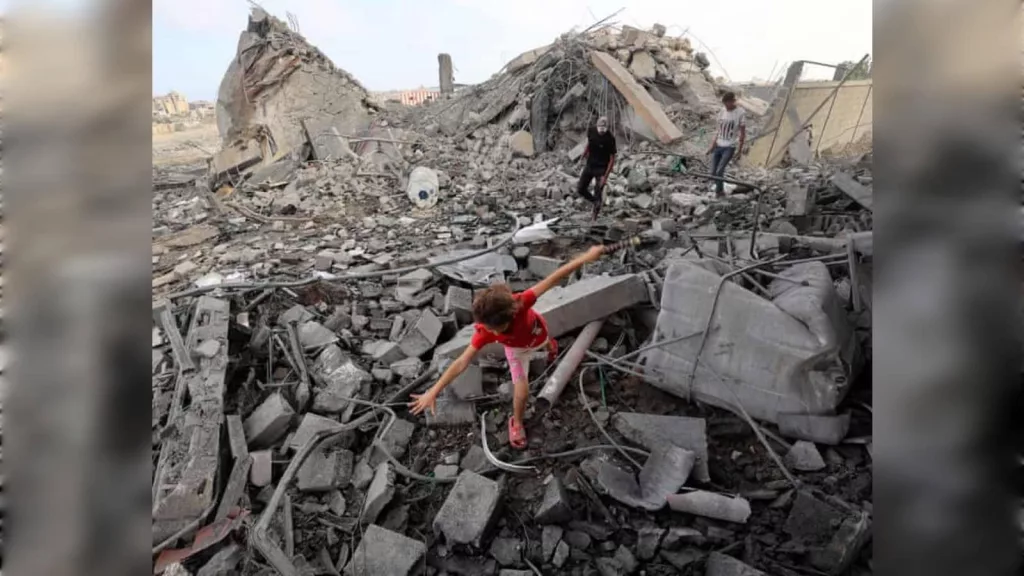
Hamas has yet to disarm, and Israeli troops have advanced rather than withdrawn. An international stabilisation force has yet to materialise, a new Palestinian administration is still in limbo, and reconstruction of the largely flattened territory has yet to begin.
Hundreds of thousands of Palestinians remain in squalid tent camps, living with the stench of sewage and rodent infestations, and in fear of Israeli strikes.
The US and Israel blame Hamas, saying its refusal to disarm has held up the process. Hamas accuses Israel of repeatedly violating the ceasefire, including through regular strikes that have killed at least 932 Palestinians, including women and children, since it took effect, according to local health officials.
In both Gaza and Lebanon, Israel says it maintains the right to strike in response to perceived threats or attempts by suspected militants to cross sometimes blurry front lines — which are shifting as troops seize more territory.
Israel now controls some 60 per cent of Gaza, compared to around half when the ceasefire was signed, and Prime Minister Benjamin Netanyahu recently said it planned to take more.
Also ReadTrump says he stopped Beirut raid, Netanyahu says Israel’s stance unchanged
Fighting rages in southern Lebanon
A Lebanon ceasefire reached in April has had little impact on the fighting between Israel and the Iran-backed Hezbollah, particularly in southern Lebanon, where they have continued trading fire as Israel expands its occupation of Lebanese territory.
Over the weekend, Israeli troops raised their flag over Beaufort castle, marking their deepest incursion into southern Lebanon since the end of the 1982-2000 occupation. Hezbollah responded with even deeper rocket attacks into northern Israel.
Israel had continued carrying out strikes after an earlier ceasefire in 2024. Hezbollah had held its fire until the US and Israel attacked Iran on February 28, setting off the wider war.
Hezbollah did not officially agree to the April ceasefire but said it would abide by it if Israel ceased its attacks and withdrew from Lebanon.
Israel says it will keep fighting until the threat of rocket and drone attacks on its northern communities has been eliminated, either by its own actions or by the Lebanese government disarming Hezbollah. That has appeared even less likely as the fighting has escalated, despite continuing Israeli-Lebanese negotiations.
Iran has meanwhile demanded a ceasefire in Lebanon as part of any truce with the United States.
Also ReadYou’re f**king crazy, everybody hates you: Trump tells Netanyahu in heated call
US and Iran trade fire as they try to reach a deal
A wider ceasefire reached in early April between the US, Iran and Israel was intended to end the regional war and reopen the Strait of Hormuz, a critical waterway whose closure caused oil prices to spike, inflicting economic pain far beyond the region.
Iran initially announced the reopening the strait after the ceasefire was reached, but moved to close it again after the US imposed its naval blockade.
Trump is demanding that Iran reopen the strait and make major concessions on its disputed nuclear programme, while Iran wants a lasting end to the war, a lifting of the blockade and sanctions relief.
The two sides appeared close to a deal last week but did not reach one. Trump has repeatedly threatened to resume the war if Iran doesn’t give up its stockpile of highly enriched uranium, while Iranian officials have said they won’t discuss nuclear issues until a more durable truce is reached.
The two sides have repeatedly traded fire in the strait, with the US acting to eliminate what it says are threats to commercial shipping or its own forces, and Iran retaliating with missile and drone attacks on Gulf countries hosting American forces.
On Monday, the US said it bombed radar and drone sites in Iran after Tehran shot down an American drone over the weekend. Iran then said it targeted American soldiers in Kuwait with missiles, which the US says it shot down.
In a statement posted on X, US Central Command said it “will continue to protect our forces from Iranian aggression while supporting the ongoing ceasefire.”
Get the latest updates in Hyderabad City News, Technology, Entertainment, Sports, Politics and Top Stories on WhatsApp & Telegram by subscribing to our channels. You can also download our app for Android and iOS.